Saturday, September 29, 2007

Smart Cycle Weight Limit


Burma (officially Myanmar from June 18, 1989, in English Burma), is a country in Southeast Asia. It occupies the western coast of the Indochinese peninsula, overlooking the Bay of Bengal and the Andaman Sea and is bordered from west to east with Bangladesh, India, China, Laos and Thailand. Currently, after the coup of 1988, under the military regime of Than Shwe. Burma is one of the countries in the developing world. It has a population of about 51 million inhabitants, but the last reliable census was conducted in 1984. On 27 March 2006, the junta moved the capital from Yangon to Pyinmana, which was officially renamed "Naypyidaw", or "seat of kings".

GEOGRAPHY
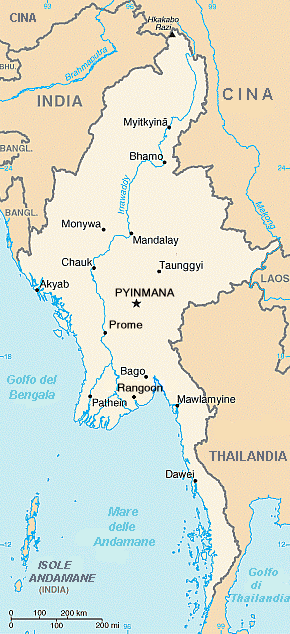
Burma is bordered to the west by Bangladesh and India, north-east with China and east with Thailand and Laos. It's big 678,500 sq km and is the largest state in Peninsular Indochina, but not the regional one (that title belongs to Indonesia). It is twice the size of Italy, slightly larger and slightly less in Afghanistan in Zambia. It is crossed by the Tropic of Cancer.
The territory can be divided into five parts from the physical point of view: the mountains of northern, western, eastern plateau, the central basin and the coastal area. In the north the peaks are steep and high and plug directly into the Himalayas, forming the ultimate spur. In the area Western chains are rather lower. To the east lies the Shan Plateau, arid wasteland in the northern part, rich in tropical forests in the south. To the west the plateau drops sheer to the south as it extends into mountains that form the coast of Tenasserim. The coastal area proceeding from north to south has high and rugged coastline, bathed in the Bay of Bengal, followed by the Irrawaddy delta and the coastal plains bordering the Gulf of Martaban. Finally, in the southern part ridivengono high and rocky coasts.

ECONOMICS
The official currency is the Kyat (to November 6, 2006, 1 € = 810.47 kyat). Represented on all denominations of paper money the "chintzed", the traditional statue. The other paper money values \u200b\u200bare 5, 10, 50, 100, 200, 500 and 1000 Kyats. Burma is one of the poorest nations in the world, because in recent history there have been economic stagnation, mismanagement and isolation. The gross domestic product of Burma is growing annually by only 2.9% (the lowest rate in the region). Since 1948, after the establishment of the first military government, Prime Minister U Nu attempted to make Burma a country rich enough. The coup in 1962 was followed by a socialist economic model, a program to check all state companies, with the exception of agriculture. In 1989, the Burmese government began to decentralize economic control. Since then it has started to liberalize certain sectors of the economy. The lucrative industries of gems, oil processing and forestry are still strictly regulated. Have recently been exploited by foreign companies that have partnered with the government to access the natural resources of Myanmar. Under the British administration, Burma was one of the richest colonies. It was the largest exporter in the world of rice and oil supplied by Burman Oil Company. Produces 75% of the teak in the world and the country believed the fastest way to development. Today, Burma has insufficient infrastructure. Goods travel primarily across the Thai-Burmese border, where most part of the illegal drugs are exported. A major "highway" is the Irrawaddy River. The railways are old and rudimentary, with few repairs since their construction in the nineteenth century. The main roads are usually not paved, except in major cities.

INTERNAL POLICY
The Union of Myanmar is ruled by a military regime. Elected in 1990, formed the Popular Assembly of the National Coalition for the Administration of the Union of Burma (NCGUB), which is now in exile and work for democracy in the state led by Sein Win, a cousin of Aung San Suu Kyi. However, the NCGUB has few powers and is banned in Burma. The current head of state, General Than Shwe, who holds the title of head of state council of peace, has all powers, including the right to remove ministers and their members, take the major decisions in terms of foreign policy. Khin Nyunt was prime minister until 19 October 2004, replaced by General Soe Win, who cut many powers to Than Shwe. Most ministries are headed by army officers, with the exceptions of the Ministry of Health, Ministry of Education and the Ministry of Labour, which are in the hands of civilians. The major political parties in Burma are the National League for Democracy and the Shan Democratic League, even if their activities are regulated by the regime. There are many other parties, representatives often the interests of ethnic minorities. There is little tolerance for 'political opposition and many political parties were proscribed. The party National Unity is the military and is supported by totalitarian organization called the Association for Solidarity and Development of the Syndicate. According to several organizations, including Amnesty International, the regime has little regard for human rights. There is no independent judiciary in Myanmar and political opposition to the military government is not tolerated. In 1989, the Burmese army violently repressed protests against economic mismanagement and political oppression. The bloodiest incident occurred on August 8 1988 when the military opened fire on rioters in what is known as directed 88. Despite the failures of the riots, the protests of 1988 have paved the way for the People's Assembly elections in 1990. The election results were later invalidated by the regime. The National League for Democracy led by Aung San Suu Kyi, won more than 60% of the votes and more than 80% of parliamentary seats in the election in 1990, held for the first time in 30 years. Aung San Suu Kyi has earned international praise as an activist for the return of democratic government in Burma, won the Nobel Peace Prize in 1991. She was sentenced to house arrest. The situation in Burma was reported to the UN Security Council for the first time in December 2005 for an informal consultation. ASEAN has also stated its frustration with the government of Burma. He formed the Inter-Parliamentary Committee to address the lack of democracy in Burma. A radical change in the political situation remains unlikely, due to the support provided by neighbors influence, in particular China. However, progress is being made to democratize the country.


FOREIGN POLICY The foreign relations of Burma are quite difficult. The United States has imposed sanctions because of the severe and illiberal way of ruling military regime established in 1988. Many economic penalties were caused by the repression of protests in the same year by instabilities that lead to ethnic conflict between the government and the Karen and the Shan and the almost total lack of democracy. The European Union has cut off trade with the state and has removed any financial aid, except humanitarian one. The U.S. and European sanctions against the military regime and the pressures of democratic Burma, have forced many Western companies to leave Burma. Asian societies, however, have decided to continue to invest there and open up new companies, mainly based on the extraction of natural gas. ASEAN will not defend Burma in any international conference resulting in a denial of military regime to restore democracy. In April 2007 the Minister Ahmad Shabery Cheek Malaysian Foreign said that neither his state, nor ASEAN would help the country and said, "Now Myanmar has to defend itself if it is involved in a discussion in any World Conference" . He was responding to opposition leader Lim Kit Siang. Lim said that Malaysia should play a productive role in regional initiatives aimed at bringing change to Burma and to note the situation of the state to the UN Security Council.

Monday, September 24, 2007

Beautician Cover Letter Sample

ice melting


The area covered by sea ice in the Arctic has shrunk to its lowest level this week since satellite measurements began nearly 30 years ago, opening up the Northwest Passage – a long-sought short cut between Europe and Asia that has been historically impassable.

In the mosaic image above, created from nearly 200 images acquired in early September 2007 by the Advanced Synthetic Aperture Radar (ASAR) instrument aboard ESA’s Envisat satellite, the dark gray colour represents the ice-free areas while green represents areas with sea ice. Leif Toudal Pedersen from the Danish National Space Centre said: "We have seen the ice-covered area drop to just around 3 million sq km which is about 1 million sq km less than the previous minima of 2005 and 2006. There has been a reduction of the ice cover over the last 10 years of about 100 000 sq km per year on average, so a drop of 1 million sq km in just one year is extreme.
"The strong reduction in just one year certainly raises flags that the ice (in summer) may disappear much sooner than expected and that we urgently need to understand better the processes involved." Arctic sea ice naturally extends its surface coverage each northern winter and recedes each northern summer, but the rate of overall loss since 1978 when satellite records began has accelerated. The most direct route of the Northwest Passage (highlighted in the top mosaic by an orange line) across northern Canada is shown fully navigable, while the Northeast Passage (blue line) along the Siberian coast remains only partially blocked. To date, the Northwest Passage has been predicted to remain closed even during reduced ice cover by multi-year ice pack – sea ice that survives one or more summers. However, according to Pedersen, this year’s extreme event has shown the passage may well open sooner than expected. The previous record low was in 2005 when the Arctic area covered by sea ice was just 4 million sq km. Even then, the most direct Northwest Passage did not fully open.

The Polar Regions are very sensitive indicators of climate change. The UN’s Intergovernmental Panel on Climate Change showed these regions are highly vulnerable to rising temperatures and predicted the Arctic would be virtually ice free by the summer of 2070. Still other scientists predict it could become ice free as early as 2040 due to rising temperatures and sea ice decline. Because sea ice has a bright surface, the majority of solar energy that hits it is reflected back into space. When sea ice melts, the dark-coloured ocean surface is exposed. Solar energy is then absorbed rather than reflected, so the oceans get warmer and temperatures rise, making it difficult for new ice to form.

The Arctic is one of Earth’s most inaccessible areas, so obtaining measurements of sea ice was difficult before the advent of satellites. For more than 20 years, ESA has been providing satellite data to the cryosphere communities. Currently, ESA is contributing to the International Polar Year (IPY) – a large worldwide science programme focused on the Arctic and Antarctic. Since 2006, ESA has supported Polar View, a satellite remote-sensing program funded through the Earthwatch GMES Service Element (GSE) That focuses on the Arctic and the Antarctic. In 2009, ESA will make Another Significant contribution to cryosphere research with the launch of CryoSat-2. The observations made over the three-year lifetime of the mission Will Provide conclusive evidence on the rates at Which ice cover is diminishing.

[The images referenced by the article can be found at the side]
[! This article is only available in English]

4 Hp Johnson Carb Parts

FROM SPACE ON THE NATURE OF THE BIG APPLE CAMARGUE

The Camargue is a wetland south of Arles, France, between the Mediterranean Sea and the two arms of the Rhone delta. The eastern arm is called the Grand Rhône, the western Petit Rhône. The administration of the territory of the department of Bouches du Rhone, which takes its name from this area. An extension of the Petite Camargue (little Camargue), just west of the Petit Rhône, is located in the department of Gard.
With an area of \u200b\u200bover 930 km ² the Camargue is western Europe's largest river delta (technically an island, however, being completely surrounded by water). It is a vast plain comprising large lagoons (étangs) of salt water separated from the sea by sandbars and encircled by marshes covered with reeds, in Once surrounded by large cultivated areas. Approximately one third of the Camargue is formed by lakes or swamps. The central area around the coast dell'Étang de Vaccarès is protected as a regional park since 1927, in recognition of his being a haven for wild birds. The Camargue Regional Park was later created in 1970. The Camargue is home
more than 400 species of birds, with pools of saltwater that provide one of the few European habitats for the pink flamingo. The ponds are also favorable to the life of insects, including some of the most ferocious mosquitoes in France. The flora of the Camargue has adapted to coexist with conditions of salt water, then bloom the sea lavender and Salicornia in addition to the reeds and tamarisk. Officially established as a national park and nature reserve in 1972, the regional park of the Camargue covers 820 km ². Here you can find some wild animals are better protected from all over Europe. There is also a museum that helps to explain the flora, fauna and history of the area. Men have lived for centuries in the Camargue, with greatly influencing drainage, dams, rice paddies and salt pans. Much of the Camargue has been drained for outdoor agricultural purposes. The Camargue has its eponymous horse breed, the famous white Camarguais ridden by Gardiens who breed fighting bulls for export to Spain, as well as sheep. There are some cities of varying size in the Camargue. Its "capital" is Arles, located far north of the delta, near the main junction of the Rhone.
The only other major cities are Saintes-Maries-de-la-Mer, about 45 km south-west, which is the destination of annual pilgrimages of the Roma people in the veneration of Saint Sarah, and the medieval fortress town of Aigues- Mortes on the western edge of the area, in the Petite Camargue. The boundaries of the Camargue are constantly modified by the Rhone valley that carries huge quantities of mud - about 20 million cubic meters a year. Some étangs are just what remains of ancient arms of the River. The general trend is the extent of dry land in Sea Mediterranean. Aigues-Mortes
So for example - on the coast when it was built - is now around 5 km inside. The pace of change has changed in recent times because of artificial barriers such as dams on the Rhône and the sea, but do not prevent the occurrence of flooding remains a problem that characterizes the regione.La Legend has it that women followers of Jesus of Nazareth, Mary Magdalene, Mary of Bethany and her sister Martha and Mary, his mother Mary, came to these shores after the first persecution at home, and this would bring the Christian creed.
happened, that, in 48, in Saintes-Maries-de-la-Mer. Legend has it that even the marshes of Camargue were inhabited by a terrible monster, Tarasque who spent his time terrorizing the population. Santa Marta, with one prayer, it did shrink in size, so much to render it harmless, and led him in the town of Tarascon. Here, however, the terrified citizens killed the creature.

Were To Find The Granola That Mcdonalds Uses


New York (New York, sometimes in Italian) is the most populous city in the United States of America and is situated in the state, which has the capital Albany.
There is the Crystal Palace, headquarters of the United Nations.
The Navel of the world, the Big Apple (the Big Apple) Gotham City, the city that never sleeps (The City That Never Sleeps), the capital of the world (via the stock exchange on Wall Street) as it has gradually been nicknamed, is certainly one of the most important cities and one of the largest world financial centers.
As one of the most popular cultural hub of the western world is the destination of a flow of tourists who probably has no equal. Being then at the United Nations, gives credibility to the affirmation of its inhabitants that is, to all intents and purposes, the capital of the world.
New York has more than 8 million inhabitants, which were originally known as "Knickerbockers", spread over an area of \u200b\u200b786 km ² divided administratively into 5 "districts" or "constituencies" (boroughs) Manhattan, Bronx, Queens, Brooklyn and Staten Island, which in turn are divided into dozens of districts (neighborhoods).
A "sixth district" (unofficial) is in fact composed of a continuum of cities in the state of New Jersey (including Jersey City, Weehawken, Hoboken), which, being placed on the west bank of the Hudson River, bordering directly on ' island of Manhattan, extended on the east bank. Considering this "district" add-on, which can not be included administratively in the city as belonging to another state, the population appears to be almost 10 million inhabitants.
The entire metropolitan area extends three states (New York, New Jersey and Connecticut) and has about 21 million inhabitants, making it still one of the most populated in the world.
wound to the heart by the attack of 11 September 2001 terrorist attack that destroyed one of its symbols, the Twin Towers, the city has shown great strength of reaction: the affected area, known throughout the world as Ground Zero will be rebuilt within a few years.

HISTORY OF THE CITY '
New York was founded in 1625 by the Dutch, the name of Nieuw Amsterdam, the first settlement was located on the southern tip of Manhattan Island. In 1664 this settlement was conquered by the British, who changed the name New York (on the emblem is still the name in Latin: Novum Eboracum).
New York was occupied by the British for almost the entire duration of the War of Independence and the city was the most important point of support the British during the war.
the early nineteenth century the importance of the port of New York was greatly enhanced by the opening of the Erie Canal, which connected the Hudson Valley to Lake Erie, and then put in communication throughout the Great Lakes region with the Atlantic coast. Through this channel, New York became the main port of goods and immigrants from Europe. Many of the newcomers settled in the city, el in population New York grew dramatically.
Between 1874 and 1898 the boundaries of New York City (which until then included only Manhattan) were greatly expanded, first with the addition of the Bronx (part of the party in 1874 and 1895) and then with the other three districts (1898). The opening of the Brooklyn Bridge (1883) had already physically joined New York City to the town of Brooklyn, who was then the U.S. third (after the same New York and Chicago). A feeling of "autonomy" survived in the borough of Brooklyn for decades: in 1920 his was separated from the main subway in Manhattan, the Bronx and Queens, and Brooklyn still some inhabitants defines "the fourth largest city in America" \u200b\u200b(not than the third, because now even overtaken by Los Angeles).
Because of the very high land prices on the island of Manhattan, between the '10s and '30s began to build buildings higher and higher, so-called high-rise buildings, which constitute one of the most famous of the city. The most famous of these is surely the Empire State Building, built in 1931, and until 1973 was the highest in the world, when it was overtaken by the famous twin towers of the World Trade Center: they are tragically known for another important episode the history of New York, the terrorist attacks of 11 September 2001, which led to their collapse and the deaths of some 3,000 people.

ORGANIZATION POLICY
The city is managed in accordance with a statute is established by legislation of the State of New York. As subject to the state, the city enjoys a high degree of legislative and executive autonomy. As in most of the United States, the city government consists of an executive branch, a legislature and a judiciary.
Executive power is entrusted to the mayor, who is chosen by a direct popular vote. The current mayor is Michael Bloomberg, a former Democrat elected to the Republicans, the first time in 2001 and again in 2005, with 59% of the vote. During the first term, Bloomberg took control of the national education system State, conducted an aggressive public health policy, has contributed in particular to restart the city's economy after 11 September. The main priorities of his second term is the restrictive policy on firearms and school reform.
Legislative power is exercised by a board of 51 citizen members, each representing a constituency of about 160,000 people. Both the mayor and the council remain in office for 4 years: the last elections were held, as we saw in 2005.
From legal point of view, because New York is spread over 5 different counties (those in the 5 boroughs or districts), it is slightly unusual compared to the rest of United States: criminal justice, in fact, is exercised by the courts of each county, and civil justice is exercised by a single court, some judges are also appointed by the mayor for a period of 10 years, instead of being elected.
The departments are the best known of the municipal police and fire departments.
The city is traditionally controlled by the Democratic Party. The Democrats control the majority of elected offices and 87% of voters are registered as Democrats.
The New York City Hall is the seat of city government and place of meeting of the Council. The mayor's office is located, along with approximately thirteen other municipal agencies in near Manhattan Municipal Building, one of the world's largest office buildings. Virtually all those who hold positions in the State of New York, including the Governor and the Attorney General, have offices in Manhattan and the same is true for both U.S. senators elected in the state. Since the United Nations Headquarters, New York is also home to the largest consular corps of any city in the world.

Women In Nylonstockings And Girdles

CAN SAVE THE EARTH ': the Kyoto Protocol


pollution of the atmosphere prevents heat accumulated on the Earth from escaping into space: these are the results of the study published in the journal Science, which once again confirm the heating the planet. Scientists from NASA, Columbia University and Lawrence Berkeley National Laboratory, through studies on the ocean, came to the conclusion that the Earth absorbs from the Sun much more energy than it releases. An energy imbalance measured in 0.85 watts per square meter, which will by the end of the century to a further increases in temperature.

A natural phenomenon
The so-called greenhouse effect is a natural phenomenon, always existed, without the gas present in the atmosphere that trap heat, the average temperature on Earth would drop to -18 ° C. With the industrial revolution, however, more than one hundred years ago, delicate balance has been altered: the consumption of oil has increased enormously and, with them, the amount of greenhouse gases emitted into the atmosphere that began to trap excessive heat. Overheating caused adverse effects on the environment chain. In the last century the temperature has risen between 0.6 and 1 ° C (this value may vary depending on the research considered). The average sea level has risen between 10 and 25 cm, the glaciers are melting, deserts are advancing and occur most often extreme weather events.

SCIENTISTS MEETING
The evidence of the increase in temperature resulted in 1988 to establish the IPCC (Intergovernmental Panel of Climate Change), the UN scientific body: 2 000 scientists from over 160 countries, have been commissioned to study climate change, its causes, the contributions of human activities and find fenomeno.Sulle solutions to stop the directives of these studies was drawn up in 1997, the Japanese city of Kyoto, an international agreement to regulate emissions of the main greenhouse gas. To become binding, the Kyoto Protocol must be signed by industrialized countries and their sum emission of greenhouse gases would exceed 55% of the total emissions of the planet. He had to wait until this year: thanks to the signing of the Russia and the sum of its share, amounting to 17.4% has exceeded the prescribed ceiling, reaching a total of 61.6%.

TO SAVE THE CLIMATE
The Kyoto Protocol entered into force on 16 February: 141 signatory countries, of which 39 industrializzati.Ogni acceding State, 2008-2012, will decrease the percentage shares variables, compared to 1990 levels, atmospheric emissions of six greenhouse gases. The reduction in expected average for industrialized countries is 5.2% from 8% of the European Union, 6% in Japan. The United States, which by themselves produce 23.5% of global greenhouse gases, have joined: the restrictions imposed, a reduction in emissions by 7%, would damage their economy too. An American citizen entering each year, more than 20 tons of carbon dioxide, compared to 7.18 tons and an Italian one, 68 tons of a Nigerian.

caring for the planet
Since much of the damage in terms of emissions are caused by modern industrial production chain, c Modific ations substantial in this area, also to a change in mentality. There can be no economic development that disfigures the planet, which is compatible with the needs of the environment. Member members have committed themselves to implement industrial policies and environmental, by controlling and reducing emissions of polluting gases in the atmosphere, will reduce global warming. To reduce emissions will require a costly restructuring and modernization of industrial technologies, which will focus mainly on improving the efficiency of power plants on the development of renewable energy instead of burning oil that emit carbon dioxide, energy saving and the increase woodlands which absorb carbon dioxide.

THE BAG OF SMOKE
Who, by 2012, will not have fulfilled the agreed reduction targets, will have to pay fines of € 40 per tonne dioxide carbonica.Per solve this problem, have been thought too way out, the so-called "flexible mechanisms "through the stock exchange of emissions (emissions trading), you can buy quotas from countries with carbon credits, which have produced that is less than the allowable limit. One ton of carbon dioxide costs € 10-12, but it is expected that in future prices saliranno.In Alternatively, to get "discounts" and remain so within the parameters established by the Treaty, can be achieved in other countries works improvements in energy and environment, for example, through interventions forestazione.Il delay dell'ItaliaDovrà probably make extensive use of flexible mechanisms Italy, which would reduce its share by 6.5%, but is in marked delay and it even increased the emissioni.Inoltre, it is the duty of every State to set up, according to the census, a plan for emissions, which indicate the strategies that follow are intended to cut greenhouse gases, divided into different sectors responsible for their production (power plants, industry, agriculture, transport, housing ...). The environmental groups also denounced the backwardness of Italy at this time.

SUN, WIND, WATER AND LAND
It is said that to reduce emissions should be sought even on so-called renewable energy, which is generated without releasing carbon dioxide, unlimited and available over the entire surface terrestre.Queste energies are produced by the sun (solar thermal for water heating and photovoltaic conversion into electricity), wind, water and earth (biomass, ie agricultural residues, forestry and livestock , which can be used directly as fuel or transformed by conversion plants, geothermal heat extracted from the ground). The Germany, with 40% of wind farms in the world, is the largest producer of wind energy, photovoltaics is second only to Japan. Already 250 000 new jobs were created in Spain, Denmark and Germany with the market development of renewable sources. According to Greenpeace, today in Italy renewables account for 2.5% of total energy production. A European directive of October 2001 (2001/77/EC) sets for each state's share of energy consumption in 2010 will be met by renewable energy: 25% for Italy.

only the first step
According
many researchers, the goals set by the Kyoto Protocol, even if they are respected, are not sufficient to solve the problems arising from climate warming Terra.Gli same IPCC scientists believe that in order to stabilize concentrations of greenhouse gases at current levels should reduce emissions by as much as 60-80%. The research bulls warn that we can not expect miracles: the greenhouse effect will continue to be felt even after emissions decreased, because the permanence of carbon dioxide in the atmosphere varied between 120-200 years. It will take so long before the climate return to the Protocol relating to critical normalità.Le also be exempted from obligations to reduce emissions of non-industrialized countries: some, like China, India and Brazil, have increased so fast that within a few decades will become the main polluters. The entry into force of the Kyoto Protocol is still an important milestone because it marks a growing awareness of the situation and a first movement in the right direzione.La first phase of the Protocol, which expires in 2012, will be followed by a second, whose Details are still under discussion. Should involve all countries in the world, and provide for a reduction in emissions compared to current levels of around 60%.

What Are Tadalafil Tablets

THE GOLDEN GATE BRIDGE


The Golden Gate Bridge is a suspension bridge spanning the Golden Gate, the strait that connects the Pacific Ocean with the San Francisco Bay. Connect San Francisco, on the northern tip of the homonymous peninsula, the southern part of Marin County. In Marin County, the city closest to the bridge is the small coastal town of Sausalito.
entire tract occupied by the bridge, also including the stretch to get on and off the bridge is 2.71 km long and the distance between the towers (main span) is 1,282 m, and the available space under the bridge is 67 m with average conditions of high tide. The height of the towers is 230 m above the water level. The diameter main suspension cable is 91.34 cm.
When it was built in 1937, The Golden Gate Bridge has become the largest suspension bridge in the world of long ago and has become the symbol of internationally recognized, of San Francisco.

HISTORY OF THE BRIDGE
The idea of \u200b\u200ba bridge linking San Francisco and Marin county was proposed by the engineer James Wilkins in an article in which he argued for the utility to make quick and safe crossing of narrow, up to then made with the ferry. The bridge gained its name in 1917 when he was appointed as the engineer of the urban city of San Francisco MH O'Shaughnessy.
The bridge was due to the ingenuity of Joseph Strauss, an engineer responsible for more than 400 bridges, but all much smaller and located further inland from the new project. It began in 1927 with the first designs that were far from being approved, and costs more than a decade in search of supporters. The initial design of Strauss included a massive cantilever on each side, connected by a central segment suspended.
Other key figures in the birth of the work were the architect Irving Morrow, responsible for the decorations and the choice of color, the engineer Charles Alton Ellis and the designer of bridges Moisseiff Leon, who worked at solving mathematical problems. In May
1924 a petition was presented to Colonel Herbert Deakyne that on behalf of the Secretary of War approved the grant of use of the land required for the construction of the bridge structure.
The Golden Gate Bridge and Highway District was incorporated in 1928 as an entity officially responsible for the design of the construction and financing of the bridge. In the District were included not only the City and County of San Francisco and Marin County, in whose territories there were two entrances of the bridge, but also the counties of Napa, Sonoma, Mendocino and Del Norte. Representatives of each of the county sit on the Board of Governors of the District, whose voters in 1930 approved funding for the project with an agenda special bond that put their homes, their farms and their businesses as collateral. This program bonds the first $ 35 million.
Construction began January 5, 1933.
The last bond was refunded in 1971 and the final budget saw the return of the initial capital of 35 million plus approximately $ 39 million of interest fully recovered through tolls.
The bridge was completed in April 1937 and was opened to pedestrians on May 27 of that year. The next day, at noon, President Roosevelt, Washington gave the official start of vehicle traffic across the bridge, pressing a button.
Regarding security of those employed in the construction, particularly effective was the safety net aimed at the bottom of the bridge, which significantly reduced the number of deaths fall than expected for such a project. 11 men died from falling, while 19 others were rescued from the network. Of the 11, as many as 10 died when the bridge was nearing completion, due to the failure of the safety net in the fall of a scaffold. The 19 who survived thanks to the protection, then became members of a particular club: the 'Halfway to Hell Club (The club halfway to hell).
Since its completion, the bridge has remained closed because of strong winds only three occasions: in 1951, 1982 and 1983.
To commemorate Joseph Strauss, his statue was placed near the bridge in 1955, to remind everyone how important was his work in the construction of the Golden Gate Bridge.
The amplitude of the central part of the Golden Gate was the longest among suspension bridges until 1964, when the Verrazano Bridge (Verrazano Narrows Bridge was built to link Brooklyn with Staten Island, two neighborhoods in New York City. When it was built the Golden Gate also owned the suspension towers highest in the world and held this record until recently. In 1957, Michigan's Mackinac Bridge surpassed in length between anchors the bridge of San Francisco, becoming the bridge with the greater length. Currently the longest suspension bridge in the world is in Japan and is the Akashi-Kaikyo Bridge.

Vanguard Precious Metals Fund

ANTARCTICA, A COLD DESERT


Antarctica is a continent surrounding the South Pole of the Earth, officially discovered in January 1820, although it is claimed the first discovery by the English Gabriel de Castilla in January 1603 during an expedition in search of Terra Australis Incognita. It is the coldest place on Earth and is almost entirely covered by ice, with the largest reserves of fresh water on the planet.

GEOGRAPHICAL
Antarctica is one of the eight regions or ecozones biogeographical Earth.
With an area of \u200b\u200b13 million km ², which will add 1.5 million square miles of barrier is the fifth largest continent of the world by extension. It consists of two unequal parts, separated by the chain of almost 3200 km long Transantarctic Mountains across the continent from the Weddell Sea to the Ross Barrier :
East Antarctica, a plateau of about 10 million km ² (ancient kingdom Australia )
Antarctica consists of the western Antarctic Peninsula, which forms an extension of the Andes.
Lelevazione likely to be greater at the Mount Vinson (5,140 m above sea level, although sometimes is indicated altitude of 4,897 m) located in the Massif Vinson, an offshoot of the Transantarctic Mountains and major depression is the Bentley subglacial trench located in the eastern part of the continent.
The ice cap covering Antarctica, almost in its entirety (59,000 km ²), sometimes exceeding 4,500 m thick, with a volume of about 30 million km ^ 3 is 90% of the reserve's freshwater globe. It is estimated that some icebergs can reach and exceed the size of Corsica. The continent is surrounded by a large area of \u200b\u200bice, the polar ice (pack), which comprises one of the most interesting ecosystems on the planet and is the source of food for whales, penguins, fish, seals and many birds.

CLIMATE, FLORA AND FAUNA
Among the various classifications proposed for the Antarctic climate remains the most valid one developed by Paul C. Dalrymple in 1966: it, while leaving the coast and the Antarctic Peninsula, divides the interior of the continent into four zones, based on strict standards, which relate the average temperatures and extreme, the average speed and frequency of wind The measure of annual precipitation and depth of Windchill. Dalrymple, therefore, Rating:
cold transition area (average annual temperature of -25 ° C to -40 ° C) cold katabatic
Area (average annual temperature of -30 ° C -40 ° C) Area
inner cold (annual mean temperature from -40 ° C to -50 ° C)
A central cold (average temperature below -50 ° C)
should be noted that, as regards' thermal aspect, there is a clear correlation between the altitude, latitude and distance from the sea (continentality). The Antarctic Plateau is a plateau of ice thickness in the east, may exceed 4,000 meters in altitude, and it is here that you realize the lowest temperatures of the world. The continuous meteorological observations on the Antarctic Plateau began with the International Geophysical Year, and today are carried out through two main sources of data acquisition: the permanent bases, managed by technical staff of scientific resident, and the AWS (Automatic Weather Stations), designed by the Wisconsin University and implanted since the early eighties.
Currently there are three permanent bases in the Antarctic Plateau: Amundsen-Scott (American), Vostok II (Russian) and Concordia (Italian French). The first, located at the geographic South Pole, according to the classification of Dalrymple falls within the interior cold: the average annual temperature (1957-2006) is -49.5 ° C. At Vostok, the cold central core, the annual average (1958-2006, with interruptions) is placed instead at -55.3 ° C.
Characteristic of Antarctic climate is the so-called Kernlose winter, a dramatic cooling that is achieved with the disappearance of the sun below the horizon and remains almost constant throughout the semester: a dynamic that is not found in the northern hemisphere, except perhaps in some of the internal areas of Greenland. So the classical seasonally, but maintained for the sake of comparison, in reality it makes little sense: Area interior cold and cold in the core, which encompass about half of the continental surface, one can speak of a two-month summer ( December and January), preceded and followed by two seasons of transition (second half of October and November, February and first half of March), the remaining seven months (mid-March to mid- October) winter.
During the summer the temperature rarely exceeds 20 ° C. The warmest month (December) at Amundsen-Scott recorded a mean of -28.0 ° C at Vostok to -31.9 ° C. The collapse temperature, which begins with the descent of the sun on the horizon, means that already in April the average of Amundsen-Scott is of -57.3 ° C, Vostok to -64.8 ° C in July, the average Amundsen-Scott is -60.1 ° C in August to Vostok to -68.0 ° C. This means that, during any period of winter, you can touch the extremes: the Amundsen-Scott to record stands at -82.8 ° C (23 June 1982), Vostok to -89.2 ° C ( July 21, 1983), the latter is the lowest temperature recorded on Earth.
Another characteristic element is the wind of Antarctica: in particular, katabatic currents that, in short, arise because of the density of cold air that is parked on the Antarctic Plateau, which tends to 'slide' to the coast. Studies initiated since the early twentieth century have shown that there are preferential ways in which they allocate katabatic winds that can exceed 300 km / h (16 May 2004 McMurdo base was devastated by the storm intensified in the last thirty years, with gusts up to 188.4 mph). Just about the winds that blow on the Antarctic seas of Antarctica Sailing Direction for the U.S. Navy specifies that "often have the intensity of a hurricane, with winds reaching at times the speed of 150-200 mph. Not known elsewhere winds of such violence, except perhaps in the tropical cyclone. "
Regarding precipitation, low humidity makes it almost absent on the continent. Remarkable is the difference between the islands and the Antarctic plateau. Regarding the first one can take as an example because of the Bellingshausen Russian base (King George Island) where, in the period 1969-2005, ranging from an annual minimum of 471.8 mm (2003) to a maximum of 991.6 mm (1998), at Vostok, however, increased from a maximum of 66.4 mm (1958), at a minimum of 0.2 mm (1982 and 1995).
The separation of the Antarctic waters from those of other oceans is called the Antarctic Convergence, is a strip of sea from 40 to 80 km wide, located about 1600 km from the coast and in which the temperature drops sharply. The Antarctic Convergence is a biological barrier insurmountable for small marine organisms and in which there is an ecosystem of very special.
The seas are very rich in zooplankton and krill (Euphausia superba This is its main component). The krill, in turn fed by a few species of algae that make up the phytoplankton, is the staple food of the food chain for animals on land and sea, it feeds on fish, whales, seals and sea lions, penguins and numerous seabirds.
on ice live and breed two species of penguins: the emperor penguins and Adelie penguins. Another thirty species of birds (belonging to the families of Charadriiformes and procellariformi) breed on the Antarctic continent, these include the royal albatross, the Snow Petrel, the Antarctic fulmars, nesting in the last two parts without snow , called Nunatak, the mountains of the interior, going up to 100 km inland from the coast.
Among the seals are widespread Weddell seals, seals and fearsome carnivorous leopard seal. During the summer months more than 100 millions of migratory birds nest and breed on sea ice and on the islands facing the continent.
Compared with the wealth of wildlife in the ocean and sea ice on the interior of the continent appears, even in those few areas deglaciation oasis, desert and desolate. The only life forms found there are bacteria, microorganisms, mosses, lichens and some invertebrates. The only plants that grow in Antarctica are two flowering plants, Deschampsia antarctica and the Colobanthus quietensis.
live in the Southern Ocean: krill, small crustaceans staple food of whales, seals and penguins, penguins, seals, cormorants and Albatros, whales, dolphins, seals and whales.

POLICY
The Antarctic Treaty, also known as Washington Treaty, is an international agreement aimed at defining the use of the parts that are uninhabited Antarctic south of latitude 60 ° S. The Treaty is the basis of the complex system of multilateral defined as the Antarctic Treaty System (Antarctic Treaty System or ATS)
objective of the Treaty is to establish guidelines for the peaceful use of the resources of the continent and for the preservation of flora , fauna and the ecosystem.
was signed at Washington December 1, 1959 and signed by the countries participating in the International Geophysical Year (1957-58) and was the first international agreement after the Second World War. Entered into force June 23, 1961.
Through the Treaty signatory countries with claims to territorial sovereignty agree to stop their demands and to abandon the economic exploitation or use for war purposes of the continent are in fact banned the activities of military and any activity involving nuclear explosions or deposits the radioactive material.

Is It Legal To Paint Cars Outdoors

AUSTRALIA, THE NEW WORLD


Australia, officially mind Commonwealth of Australia, is the nation's sixth-largest in the world (7,686,850 km2, the only one that occupies an entire continent and the largest in the whole of Oceania and Australasia. It has a population of 20,180,878 inhabitants (Census 2004). The capital is Canberra, the most populous cities are Sydney, Perth, Brisbane, Melbourne and Adelaide.
Being an island does not border other countries. Those closest are New Zealand in the south-eastern Indonesia, Papua New Guinea and East Timor to the north.
The name Australia derives from the Latin phrase Terra Australis Incognita.

HISTORY
Australia is inhabited by about 42,000 to 48,000 years, ie since the ancestors of Australian Aborigines arrived today from today's South-East Asia. The land was discovered by Europeans until the eighteenth century, when it was sighted and visited by numerous expeditions (and therefore defined new world). The first in 1770 by Captain James Cook. That same year, eastern two-thirds of the continent was claimed by the United Kingdom, and initially colonized the New South Wales 26 January 1788 as a British penal colony. The rest were claimed by the United Kingdom in 1829. Most of the states which later federated to form the Australia however, were not born as a penal colony.
On 1 January 1901, comes the Commonwealth, or federation of Australia, as a rule within the British Empire. Australia was now independent, although the last legal ties with the United Kingdom were not severed until 1986. Australia is a constitutional monarchy with Elizabeth II as the reigning Queen of Australia. In 1999, the population was called upon to vote on a referendum to make a constitutional change and transform Australia into a republic with a president to replace the Queen as head of state, but was rejected.

GEOGRAPHICAL
Australia is bordered to the south by the Indian Ocean to the north by the Arafura Sea, north-east by the Coral Sea, north-west with the Sea of \u200b\u200bTimor, south- east by the Tasman Sea.
Most of the Australian territory is desert or semi-desert. 40% of the surface is covered by sand dunes. Only the ends of the country, south-east and south-west have a temperate climate and moderately fertile soil. The northern part of the state has a tropical climate. The Great Barrier Reef, by far the largest barrier reef in the world , lies a short distance from the coast north-east, while Uluru in central Australia is the largest monolith in the world.
This country has about 90% of Oceania. Australia has also the island of Tasmania, from which is separated by Bass Strait and is divided into three regions: the eastern part, where are the Australian Alps and the Great Dividing Range to the west, where there are some plateaus and desert areas, where the center is Lake Eyre, the largest of the state. In the desert area there are some typical Australian animals: the kangaroo, the devil macaque, the dingo, the koalas and emus.
The Australian landscape has 4 types of vegetation: the bush composed of up to 40 m tall eucalyptus trees; evil formed by eucalyptus trees no taller than 5 m in the mulga, made of acacia trees, plants, and finally made the scrub bushes low.
The time zone of the state varies from UTC +8 to UTC +10. Some islands come to UTC +11 and UTC +6.5.

CLIMATE, FLORA AND FAUNA
Although most of the continent is arid or semi-arid, Australia nevertheless includes the different types of habitats, from the peaks of the coral reef to rainforest. Because of the high age of the continent, the climate is very variable and its ancient island Geographically, the majority of Australia's animal and plant species are unique. The kangaroo, platypus, seals, the koala, the shrew, the Australian chicken, the emu and echidna aroused the wonder of the early European explorers. Australia is home to the 10 most poisonous snakes in the world, such as the Taipan, the king brown snake and death, however, fatal cases of bites are rare, as these animals prefer to flee rather than bite. The horses, sheep and cows were imported from mainland Europe but in recent times. In Australia there are more than 106 million sheep, nearly 5 per capita human! The rabbits and dingoes are a serious problem.

ORGANIZATION POLICY
The Commonwealth of Australia is a parliamentary monarchy: the Queen of Australia (that is, the Queen of the United Kingdom) is the official head of state and is represented by a governor general. In practice, the role of the crown (and then the governor-general) is largely ceremonial. The executive power theoretically represented by the Crown is exercised by a cabinet led by Prime Minister. The prime minister is almost always the leader of the majority party in the House of Representatives, the lower house (with 150 seats) of the bicameral parliament. The members of the House of Representatives are elected in single-member constituencies. The upper house (76 seats) and the Senate, where each state is represented from 12 senators, regardless of population, territory and any two. The elections for both chambers are held every three years, typically with half of the Senate eligible for reelection.

STATES AND TERRITORIES
Australia is divided into six states and several territories.
The states are: South Australia, Western Australia, New South Wales, Queensland, Tasmania, Victoria. The two major territories are the Australian Capital Territory and the Northern Territory. Australia also has several smaller territories: the Jervis Bay Territory, New South Wales, administered as a naval base and seaport for the capital, several external territories inhabited: Norfolk Island, Christmas Island, Cocos Islands and several largely uninhabited external territories: Coral Sea Islands, Heard Island, Ashmore and Cartier Islands and the Australian Antarctic territory.
The Australian Capital Territory was created at the place chosen for the capital Canberra. Canberra was established as a compromise between the two largest cities, Melbourne and Sydney.
Other major cities in Australia outback Alice Springs, Cairns and Brisbane (East Coast), Darwin (north coast), Perth (west coast) and Adelaide (south coast). The Australian population resides in cities of 85%. The state is a member of numerous international bodies like the UN, APEC and the Commonwealth.

ECONOMICS
Australia has a prosperous Western-style mixed economy, with per capita income level of the four dominant West European economies.
In recent years the Australian economy has faced a global crisis with steady growth. The growing production in the domestic economy has opposed the overall decline, and business and consumer confidence remained strong. Australia's emphasis on reforms is another key factor behind its economic strength.

POPULATION
Most of Australia's population is descended from immigrants of the nineteenth and twentieth century, initially and primarily from the United Kingdom and Ireland but later by other nations, especially Italy, Greece and Asian nations. The descendants of the original population, Indigenous Australians make up 2.2% of the population, according to the 2001 census. Common to many other developed nations, Australia is currently experiencing an aging population with more retirees and fewer people of working age. English is the language spoken in Australia, even if some of surviving Aboriginal communities maintain their native language, and a considerable number of first and second generation immigrants are bilingual.
Even if the nation is largely secular, and few practitioners, three quarters of Australians say they Christians, mainly Catholics or Anglicans. They also practiced a number of other religions.